
• GET A QUOTE
  • CUSTOMER LOGIN
  • AGENT SIGN-IN
People's Trust Insurance
  • Customer Login
  • Agent Sign In
  • Insurance
    • Insurance ChoicesLearn about Florida homeowner’s insurance options
    • Flood InsuranceInformation about flood insurance in Florida
    • Insurance TermsInsurance Terms Glossary of terms
    • Buyers Guide HubHome insurance buying info
    • Discountsavailable discounts on home insurance
    • Homeowners InsuranceTraditional home insurance information
  • Policyholders
    • Policyholder InformationInformation for People’s Trust policyholders
    • Make a PaymentHow to make a payment
    • File a Claim24/7 claims support
    • Update InformationUpdate your information
  • Info Center
    • Homeowner’s AcademyArticles about home insurance
    • Q&A LibraryAnswers to frequently asked questions
    • CareersLaunch your career with People’s Trust
    • NewsroomView our latest news
    • Contact UsHow to contact People’s Trust
    • Hurricane Planning HubNeed-to-know hurricane info
  • About Us
    • Simply a Better WayLearn about our unique approach to protecting your home
    • Our CommunityWe don’t just insure your home, we live here too!
    • Executive TeamMeet our executive leadership team
    • Financial StrengthFinancially strong for when you need us most
    • People’s Trust ReviewsReviews from current policyholders
    • CareersLaunch your career with People’s Trust
    • People’s Trust TestimonialsTestimonials from current policyholders
  • GET A FREE QUOTE
Select Page
  • Celebrations
  • Florida Insurance Industry
  • Home Care
  • Household Finance
  • Insurance Online
  • Weather Preparation
Homeowner’s Academy
This is your guide to interesting facts, tips and general homeowner information. We hope you find the information useful – and feel free to share with friends!

7 Ways to Avoid Getting Caught in a Home Repair Insurance Scam

Spring cleaning often comes with a fresh coat of paint. Painting can be a great way to change the feel of a room or give your home some great curb appeal. Painting also plays a role in home repair by protecting the wood of your home against the elements, essential here in Florida.

If you decide to try your hand at painting this spring, People’s Trust has some tips that can keep the experience enjoyable and safe for everyone in your family.

Try Some Eco-friendly Paint

Spring conjures up the sniffles for many people in the great outdoors, but paint may do the same thing inside of your home. Household paints have previously contained up to 300 toxic chemicals, including the hazardous volatile organic compounds (VOCs) that release particles into the air for years after you paint.

Try a low-VOC paint, which tends to be water-based, for any home interior painting. These have taken off in recent years and come in every shade and finish imaginable. Some brands also create no-VOC paints by replacing chemicals with more natural ingredients. These no-VOC paints are often pet-safe, but always check the label and never leave your pet unattended in a room where paint cans are open.

Home Repair Supervision

If you have children, never let them be in a room with open paint cans by themselves. If children are under the age of 10, they should never be in a room with any open painting materials. Even eco-friendly paints are extremely dangerous if ingested. If you believe your child has ingested any paint, immediately call poison control at 1-800-222-1222.

Try Cloth Catchers for Indoor and Outdoor Painting

You can pick up plastic sheets to protect your floors and lawn, but these often move and tear as you walk around painting. Turn to cloth or canvas drop cloths that will stay in place easier and can be weighed down with objects without the risk of tearing.

For painting the outside of your home, try a tarp with tie-holes. These can be staked into the ground to provide a steadier surface for a ladder.

Ventilate: Make Room to Breathe

If you’re painting inside, open the doors and windows. If your room has a fan, turn it on. You want proper ventilation for any space you’re painting to help air out the room and not breathe in paint fumes. If you can’t ventilate where you’re working, get a respirator and only paint in short stints.

Ventilation is essential to most common home repair improvements.

Stick to the Shade

If painting outside, you know that you need to take a break in the shade, but what about your materials? Paint, paint thinner and lacquer all need to stay in the shade as much as possible when painting outdoors.

Not only can heat and sun alter some of these items when they’re sitting in the can, but heat can also be a big problem for these flammable items. The city of Las Vegas actually warns its citizens to be careful when painting their homes or canvases outside because paint thinner has been ignited by the sun and started home fires.

Clean Up after Home Repairs

When you finish painting for the day, clean up the entire space. This will prevent spills and any accidental exposure.

Latex paints can typically be cleaned from surfaces and your skin with soap and water. Oil-based paints will have specific cleaning instructions located on the paint can itself. Take a look at your can before you start painting and write down what it says, because paint often spills on the outside of the can during the painting process.

Gasoline was once used to clean paint off of brushes, but this should never be used. Gasoline is extremely dangerous and should never be used as a cleaner for any object.

It’s always a smart practice to clean up and watch your space clearly when doing any home repair project.

Filing a claim after a loss can be stressful. To avoid the hassle of having to hire a restoration contractor and coordinate repairs, many Florida homeowners seek out the help of a public adjuster. Public adjusters are insurance claims specialists who work independently from the homeowners’ insurance company and assist in managing the repair process.

Assignment of Benefits Abuse… A Growing Problem for Florida Homeowners

While most public adjusters and restoration contractors are trustworthy, we’ve seen a significant increase in Assignment of Benefits abuse cases over recent years—and it is costing homeowners throughout the state of Florida.

Assignment of Benefits abuse is a type of home repair insurance scam in which shady contractors team up with public adjusters and trial lawyers. After convincing the homeowner to sign a broadly worded contract, they overstate the repair bill and file a hefty lawsuit against the insurance company, often leaving the homeowner caught in the middle of a claims nightmare.

Fortunately, Assignment of Benefits abuse is preventable. Here are some simple steps you can take to avoid getting caught in the middle of a home repair insurance scam:

1. Ask Around

Don’t hire a public adjuster or contractor based solely on an ad you saw online or in your local newspaper. Get recommendations from friends, neighbors, or nearby relatives. Before hiring a contractor, request a list of references and visit the sites to verify the quality of the work, if possible.

2. Do Your Research

Before hiring a public adjuster or contractor, go online and research what other people are saying about them. Several complaints and a low rating are potential indicators of shady business practices. Verify that your public adjuster is licensed through the Florida DFS Public Record, and search the Florida Department of Business and Professional Regulation portal to confirm that the contractor you plan to use has the required license or registration.

3. Never Pay in Full Up Front

Public adjusters are typically paid after a claim is handled. Never pay in full upfront, and be leery of public adjusters who only accept cash payments. If you’re asked to put down a deposit, it should be no more than 25 to 33 percent of the total job cost. After the work is completed, wait to make your final payment until you receive a lien waiver stating that everything has been paid for.

4. Communication Is Key

Make sure your public adjuster communicates with you and keeps you well-informed on fees and services. Public adjusters usually charge 10-15 percent of the total claim settlement, and your home insurance company typically will not cover these fees. Reliable public adjusters are usually more educated on policy coverages. Your public adjuster should be familiar with your policy and clearly explain what coverage and benefits you’re entitled to.

5. Get Everything in Writing

Request a written contract that includes a detailed list of the repair work to be done, costs, materials, start and completion dates, and warranty information. Carefully read the fine print, and never sign a contract that you do not understand. If necessary, have your contract reviewed by an attorney first.

6. Report Fraud

Florida homeowners can cancel a home repair contract within three to five days of signing. If you suspect fraud, notify your home insurance carrier immediately and report it to the Florida DFS Division of Insurance Fraud, either online or by calling toll-free 1-800-378-0445.

7. Call Your Insurer First in the Event of a Loss

In the event of a loss, call your insurance company first. If your property is insured, your insurance policy is the best vehicle for recovery. Review your policy to ensure you understand your coverage by reading your policy’s declarations page, which shows how your policy is divided into coverage categories (Dwelling, Other Structures, Personal Property, and Loss of Use/Additional Living Expenses). Your policy may also have additional Endorsements listed on your declaration page, including categories such as liability and medical payments.

At People’s Trust Insurance, your policy entitles you to 24/7 emergency service and covered damage repairs. Our preferred contractor is immediately deployed to your home to help mitigate damage and get the ball rolling on recovery. Filing a claim after a loss is nerve-wracking enough; the last thing you should have to worry about is a home repair insurance scam. Following these tips can help keep you (and your home) safe.
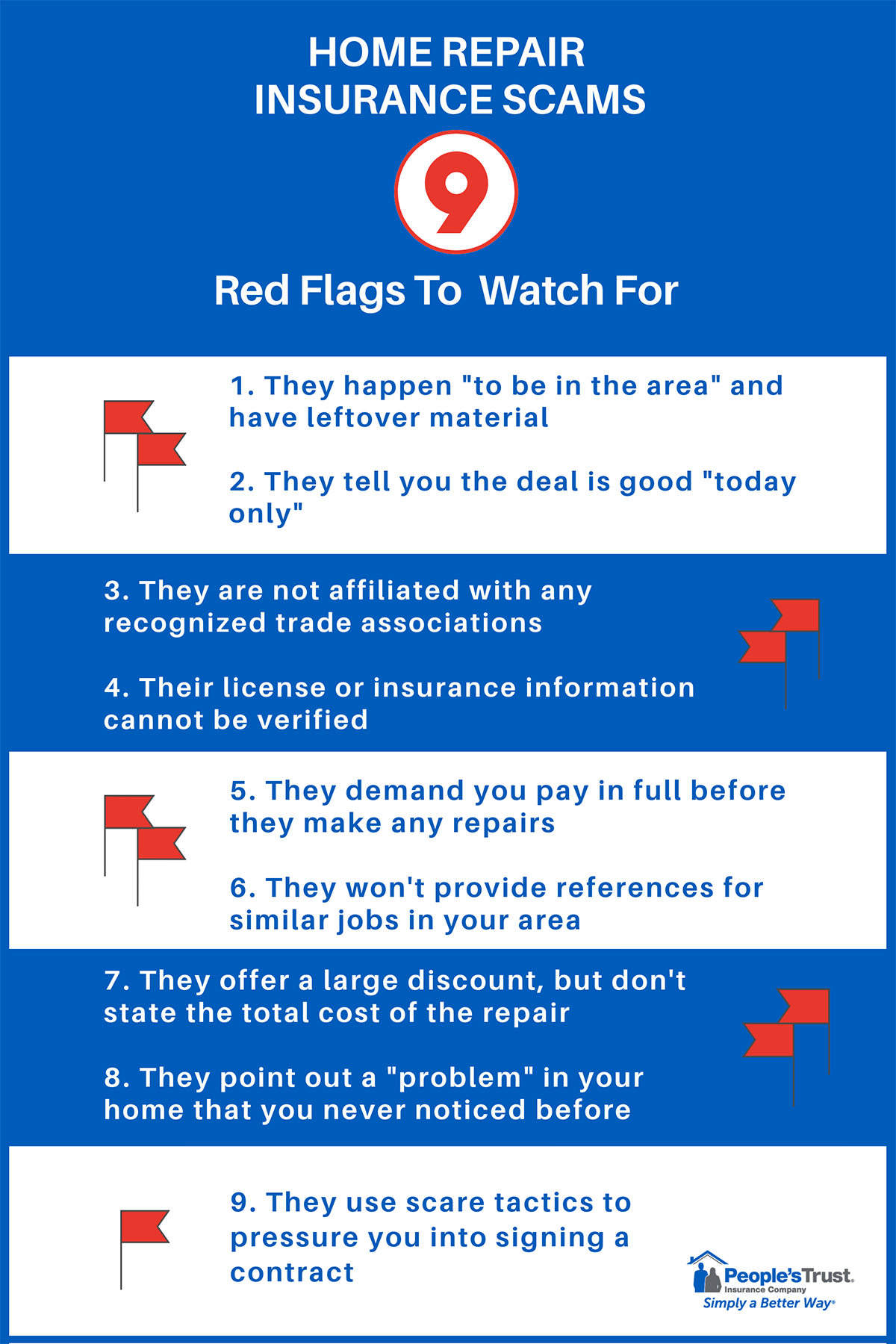
9 Home Repair Insurance Scam Red Flags Infographic

People’s Trust Insurance
18 People’s Trust Way
Deerfield Beach, FL 33441-6270


Policyholders

  • Policyholder Information
  • Make a Payment
  • File a Claim
  • Update Information

Info Center

  • Homeowner's Academy
  • Newsroom
  • Q&A Library
  • Contact Us

Insurance

  • Insurance Choices
  • Homeowners Insurance
  • Flood Insurance
  • Insurance Terms
  • Buyers Guide Hub
Better Business Bureau Accredited Business
member of faia
Enterprise Award Winner

© 2026 | People's Trust Insurance Company | Terms of Use | Privacy Policy